Use the intuitive appliance electricity cost calculator below to estimate how much you’ll spend powering a range of everyday appliances and devices.
How to Use This Calculator
Simply choose an appliance and apply your typical usage. Energy and cost calculations are automatically worked out for you with minimal input.
To ensure maximum accuracy, the only information you’ll need is the actual unit rate you pay for electricity in pence per kWh. You can find this on your latest electricity bill or by contacting your energy supplier.
If you don’t know the rate you pay, the calculator is pre-filled with the UK average based on the current energy price cap tariff.
How to Calculate Appliance Running Costs
Figuring out how much it costs to run different household appliances can seem complicated, but it’s easier than you think with a simple four-step formula.
Cost = Power (Watts) x Time (Hours) / 1000 x Electricity rate (p/kWh)
Let’s break that down:
1. Find the power rating of the appliance (Watts)
Check the appliance label or manual for the power rating, usually listed in Watts (W). This tells you the maximum amount of electricity the appliance can draw from the supply at any one time.
For example, my Ninja air fryer shows a power rating of 1800w on the product label.
2. Estimate average usage time (Hours)
Calculate how many hours the appliance is used per day or per cycle. If that’s less than an hour, simply divide the minutes by 60.
For example, I typically set my air fryer with a thirty-minute cycle. So 30 / 60 = 0.5 hours.
3. Convert watts and time to kilowatt-hours (kWh)
Electricity is priced in kilowatt-hours (kWh), so we need to convert the power rating and usage time into kilowatt-hours.
Use this formula:
Watts x Time in hours / 1000 = kWh used
Example: So an 1800W air fryer for 0.5 hrs is: 1800W x 0.5h / 1000 = 0.9 kWh
4. Multiply kWh by electricity rate (p/kWh)
Check your utility bill for your electricity unit rate in pence per kWh. Then multiply:
kWh used x Electricity cost per kWh = Running Cost
Example: Using the 0.9 kWh air fryer example with a 30 p/kWh unit rate: 0.9 x 0.30 = £0.27.
Household Appliances with Variable Power Demand
For some appliances like washing machines and ovens, calculating energy use is more complicated because their power draw fluctuates over a cycle of operation.
There are a few reasons why:
- Variable power settings – Ovens and washing machines often have different modes/settings that use more or less power. For example, an oven may use 2000W on full power bake but only 1000W on convection.
- Intermittent power draw – Appliances such as washing machines go through active heating/cleaning cycles followed by idle periods over a full run. A washing machine may surge to 2000W to heat water but drop to 200W during a soak or rinse segment.
- Cycle times vary – The total time an appliance is used can differ based on settings. A heavy oven bake may take 45 minutes versus 30 for a quicker convection cook.
- User habits differ – How someone uses an appliance affects the amount of power drawn. Washing in cold water versus hot can impact a washer’s power demand.
So while we know the maximum wattage from the manual or product specifications, the complexity comes from estimating the average power over a full cycle.
Since it dynamically spikes and dips, assuming a constant level of power at the maximum wattage will overestimate energy use and costs.
How to Ensure Accurate Running Cost Calculations
For a more accurate estimate, look for energy consumption data per cycle or hour.
These numbers are now included on energy rating labels for dishwashers, washing machines, fridge freezers, ovens and even light bulbs.
The important thing to remember, though, is that these energy consumption figures are based on using an appliance’s eco-programme, which you might not always use.
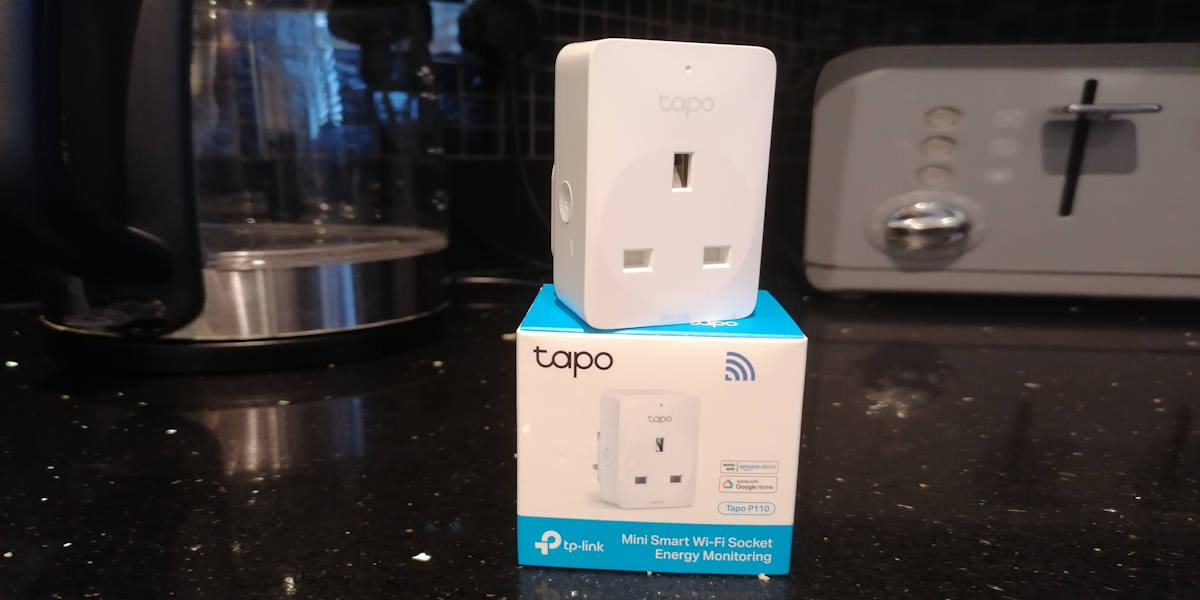
The only way to get precise electricity costs specific to your home and lifestyle is to use monitoring devices like smart meters or smart plugs to measure actual consumption over multiple uses.
This better accounts for real-world use and an appliance’s variable power demand.