- It’s possible to save hundreds of pounds a year by applying five simple changes to your appliances and energy habits today.
- Many of these changes are completely free or cost just a few pounds.
- Understanding your energy bills and how your appliances contribute to them, makes it easier to identify where the biggest savings can be made.
Some of the most effective ways to save energy at home are either free or cheap to apply and will have an immediate impact on your energy consumption.
The reason I know is that I have adopted every tip listed below, and continue to use them almost every day because they work.
There’s a lot more than five ways to save energy at home, but I’ve listed those that will give you the biggest savings with minimal impact on your lifetsyle.
Where possible, try to re-invest some of the initial savings back into your house by upgrading the most energy hungry appliances or devices to the latest energy efficient models.
But before you do, check with your energy supplier and local authority, as you might qualify for an energy saving grant to help you with any initial purchase costs.
1.Reduce Unnecessary Water Heating
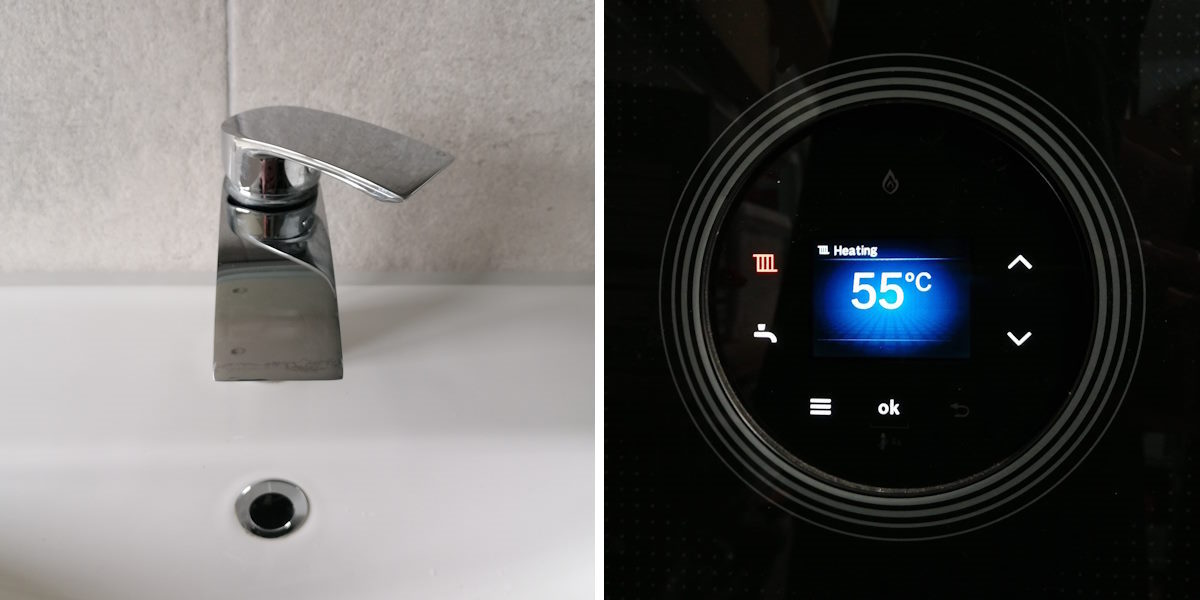
If you have a combi boiler, one of the biggest savings can make, without affecting your lifestyle, is to reduce the radiator flow temperature.
Normally set to around 70 degrees by default, Nesta and their Money Saving Boiler Challenge claim you can save around £112 a year by reducing the temperature to 60 degrees.
Turning this setting down means that your boiler has less work to do to when you switch on your central heating. That means less gas is used so reducing your energy bill.
If you have a modern or well insulated home, you might be able to reduce the flow temperature even further.
There’s lots of different makes and models of boiler and if you’re not familiar with your boilers settings read the instruction manual first. The Nesta website also has an interactive walkthrough to guide you through the steps.
I have our combi boiler flow temperature set to 55 degrees, which is manageable for us.
More Water Heating Tips
- Turn down the hot water temperature
As well as a radiator flow temperature setting, combi boilers also regulate the temperature of hot water that comes out of your taps and shower. If you feel you could manage with a lower setting, try turning it down and test for comfort. - Switch off the boiler pre-heat function
If you have a modern energy efficient combi boiler, you can save 5-10% on your gas bill by switching off the preheat function according to the Heating Hub. Designed to maintain a hot reservoir of water ready for use, it costs energy and money to maintain. Pre-heat is turned off on our boiler and we don’t notice it. - Be careful with your taps
If you have a combi boiler and mixer taps in your kitchen and bathrooms, make sure the taps are set to cold whenever possible. On many modern mixer taps, the handle has a dual purpose, to switch on the water and select the temperature. This can make it hard to know when you’re drawing hot water unless the handle is fully on hot or cold. Leaving the handle in the middle position may feel like it’s only using cold water, but can actually trigger your boiler to start heating. If you’re only needing a quick hand wash, you’ll be turning on your boiler unnecessarily and wasting gas. - Switch to a stove kettle
If you have a gas hob, consider using a stove kettle. As gas is around a quarter of the price of electricity, it’s cheaper to boil water for tea, coffee and cooking. The only downside is finding a stove kettle that has a fill level indicator. Ours is a small £6 1L camping kettle which is hard to overfill but big enough for a few large cups of tea.
Water Heating FAQs
How can I make my boiler more energy efficient?
A combination of reducing the flow rate temperature, turning down the thermostat and setting the heating controls to suit your schedule will make your boiler and heating much more energy efficient.
Do kettles use a lot of electricity?
Kettles use between 2000 and 3000 watts depending on the model and features such as fast boil. The more you fill a kettle, the longer it takes to boil and the more energy required. Only fill with the amount of water you need, and you’ll save time, energy and money. Alternatively, if you have an off-peak electricity tariff, you can boil a full kettle when the cost is lower, and store the excess in a well insulated flask for later use.
What is the cheapest way to boil water for tea?
If you have a gas hob, then a stove kettle is the cheapest way because gas is much cheaper per unit than electricity. You can buy a basic 0.5L camping kettle for around £4 which has a whistle boil indicator. Although they don’t usually have a fill level indicator, you can simply fill your cup with water first, then tip it into the kettle for maximum efficiency.
2.Replace Lightbulbs With LEDs
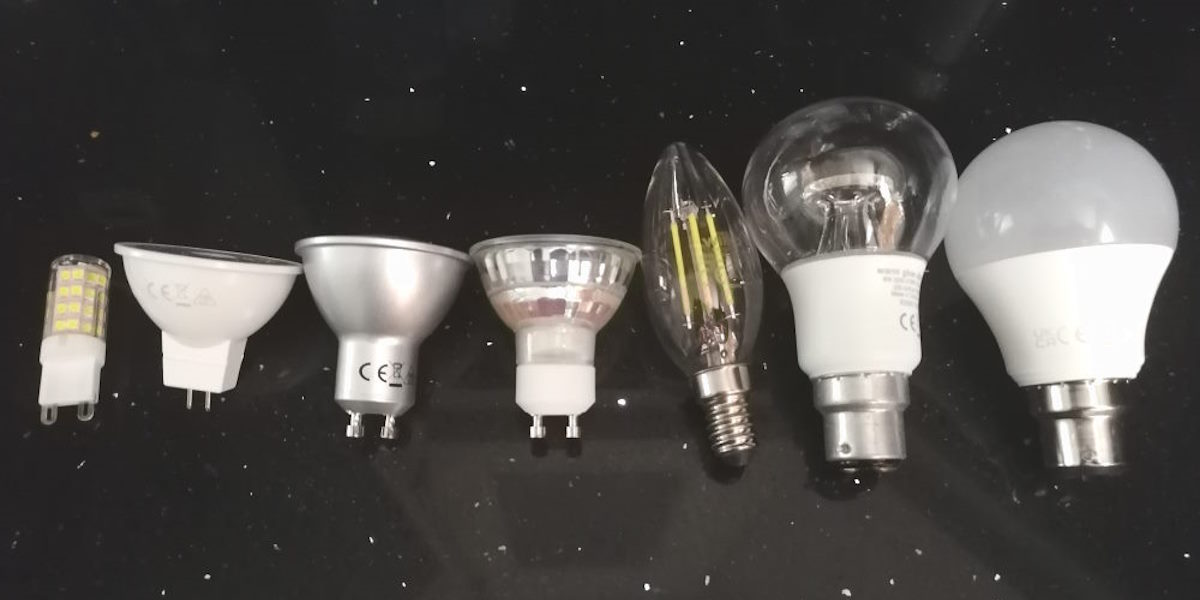
According to the Energy Saving Trust, lighting accounts for 11%-15% of the average UK household electricity consumption.
Although many of us have replaced some or all of our light bulbs with more energy efficient versions, there’s still savings to be made by switching from the original curly CFL (Compact fluorescent) bulbs to LED (Light Emitting Diode) ones.
Plus, LED light bulbs are about the same cost, switch on faster and last much longer.
More Lighting Tips
- Switch off
It’s easy to forget, but switching off lights when you leave an unoccupied room can save you £25-£30 a year alone. - Replace fluorescent tube lights too
You can buy LED replacements for fluorescent tube lights, which use around 60% less energy and provide more reliable lighting too. I replaced two old fluorescent garage lights with 18w LED versions and the difference in the quality of light is instant. - Don’t forget about outside lights
It’s easy to forget about outside porch or security lighting. These lights have to illuminate a large area so if they are using older halogen bulbs, they can use much more energy than the LED equivalent.
Lighting FAQs
Which energy saving light bulbs are best ?
The best energy saving light bulbs combine efficiency while being suitable for your budget, room, light fitting and switch. The best type of bulb is undoubtedly LED because they are so energy efficient, but there are lots of brands with different fittings, styles, colours and effects.
Are energy saving bulbs dimmable?
Yes, the last time I replaced some of our light bulbs that had a dimmer switch, I did manage to find LED replacements that are dimmable. In my experience, they’re not as common but are available easily online.
How much electricity does a LED light bulb use?
That depends on a few variables, such as the bulb’s wattage, and your unit cost of electricity. But the average cost to run a 3 watt LED bulb is £0.001 per hour.
3.Use Lids When Cooking With Pans
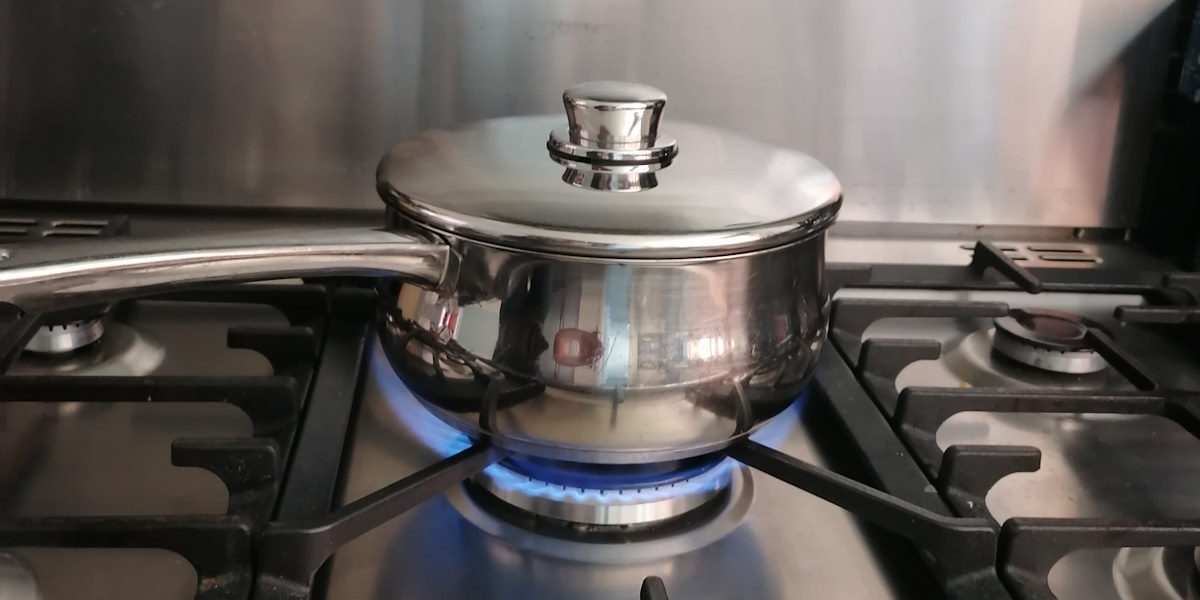
I’ve noticed a dramatic difference in the time it takes to boil a pan of water for rice, pasta or vegetables when a lid is added.
Whether you have a gas or electric hob, using a lid keeps the heat in the pan, reducing the heating time and amount of energy required to cook food.
Some experiments show that cooking time is reduced by as much as 50% when a lid is used.
One exception to this is when you need to reduce a sauce and need some moisture to escape to thicken it.
More Cooking Tips
- Use residual heat
If you have to cook in an electric oven, switch it off a few minutes earlier than usual and let the residual heat you’ve paid for finish the cooking process without any extra power. - Batch cook
Get the most out of your oven by filling it with food that you can freeze for later use. You could save £109 a year batch cooking according to Utilita.
Cooking FAQs
What is the cheapest way to cook?
While slow cookers use the least amount of power, if you need to cook food quickly, microwaves are the most efficient. They typically only require 700–1000 watts to power them, compared to around 2000 watts (2 kilowatts) for a fan assisted oven.
And because microwaves work differently to traditional ovens, there’s no waiting for them to heat up. If microwaving isn’t suitable for the food you want to cook, consider an air fryer. Our Ninja air fryer uses up to 1700 watts of power but is a much smaller space to heat than a normal oven, saving time, energy and money.
Are slow cookers energy efficient?
Yes, slow cookers are one of the most energy efficient cooking appliances but take 6-8 hours on the lowest setting. They are designed to operate at a low wattage and use consistent, low heat, reducing electricity consumption. To give you an idea, our cheap Morphy Richards slow cooker uses up to 170 watts, almost 13 times less than the fan assisted oven at 2200 watts (2.2 kilowatts). The longer cooking time allows for efficient use of energy once the desired temperature setting is reached.
Is it cheaper to cook by gas or electricity?
Generally, it’s cheaper to cook on a gas hob compared to an electric one, as it’s about a quarter of the price per unit. Our Economy 7 gas unit rate is 6.7p/kWh and electric unit rate is 34/kWh.
4.Maximise Washing Machine Efficiency
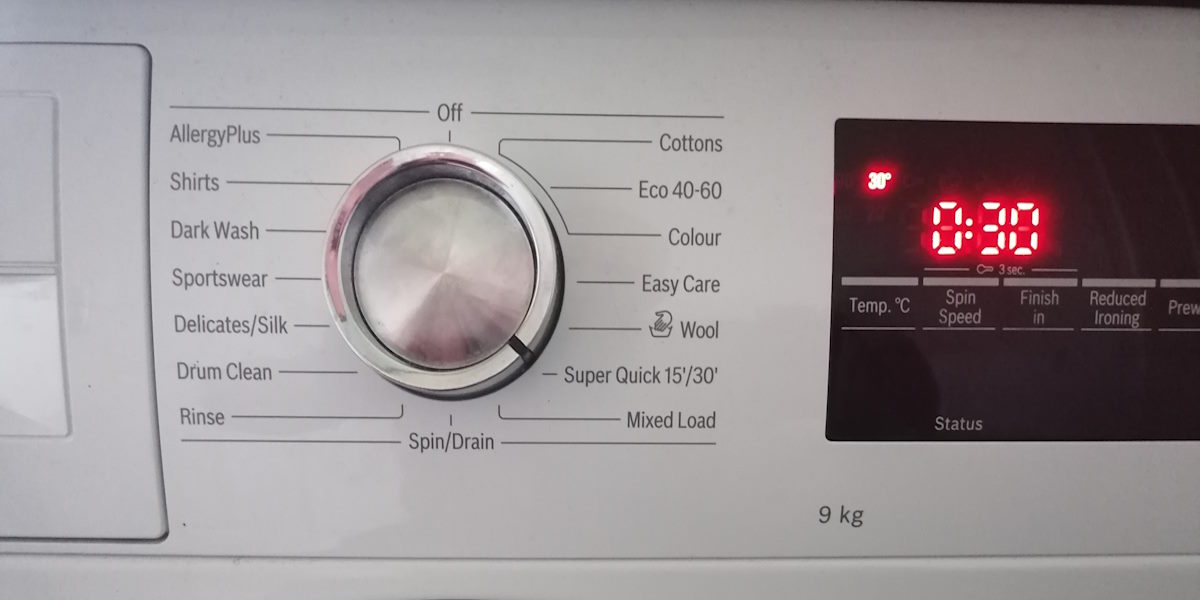
Washing machines are one of the most essential and frequently used home appliances, contributing around 10% of an average household’s energy bill.
Much of the energy used by a washing machine is the heating cycle, so switching to a cooler wash temperature like 30 degrees will reduce the electricity needed to power it by around 40% according to inthewash.co.uk.
Depending on your machine and chosen programme, that equates to approximately 0.3 kWh less than the average electricity used per cycle of 0.793 kWh. At current average EPG rates of 30p/kWh, a saving of 9.5p per wash. If you wash 200 times a year, thats an annual saving of £19.
As a family of five, we use ours every day but have had to adjust how we use it to maximise the savings. Here’s how…
- If you have an economy 7 tariff, use the delay timer to wash overnight when rates are cheaper.
- Where possible, wash at a lower temperature.
- Use a quick wash programme (cleans as well as longer washes, except for stains).
- Use a fast 1400 spin cycle that reduces the moisture in the clothes and makes drying easier.
- Only wash full loads reducing the number of washes needed (leave enough space for clothes to move around and washing liquids to circulate).
More Clothes Washing Tips
- Use the right washing detergent
Due to the demand for washing clothes at lower temperatures, some washing powder and liquid manufacturers have reformulated their products to be just as effective in cooler washes. Be sure to shop around and look for cold wash cleaning features. - Soak soiled or stained clothes first
Stains usually require hot water to shift, so by doing some of that work before washing can reduce the need for higher temperature washes.
Washing Machine FAQs
Does washing at 30 degrees use less electricity?
Yes, about 40% less than washing at 40 degrees. Heating takes energy, which in a washing machine is provided by electricity, so the higher the heat, the longer the heating cycle and the more electricity required to power it.
What is the best cycle to save money on a washing machine?
The best washing cycle to save money is the quickest and coolest wash, as that will minimise the amount of electricity required to power the machine and heat the water.
What is the cheapest way to use your washing machine?
If you have an off-peak electricity tariff where the unit price is lower between certain times like 12am-7am, you’ll save the most by washing then. Your washing machine will need to have a delay timer for this to work though. To give you an idea of the saving, our off-peak night unit rate is 60% cheaper than the day rate. Combine that with a shorter, cooler wash and the savings can really stack up over a year.
5.Use Your Tumble Dryer Carefully
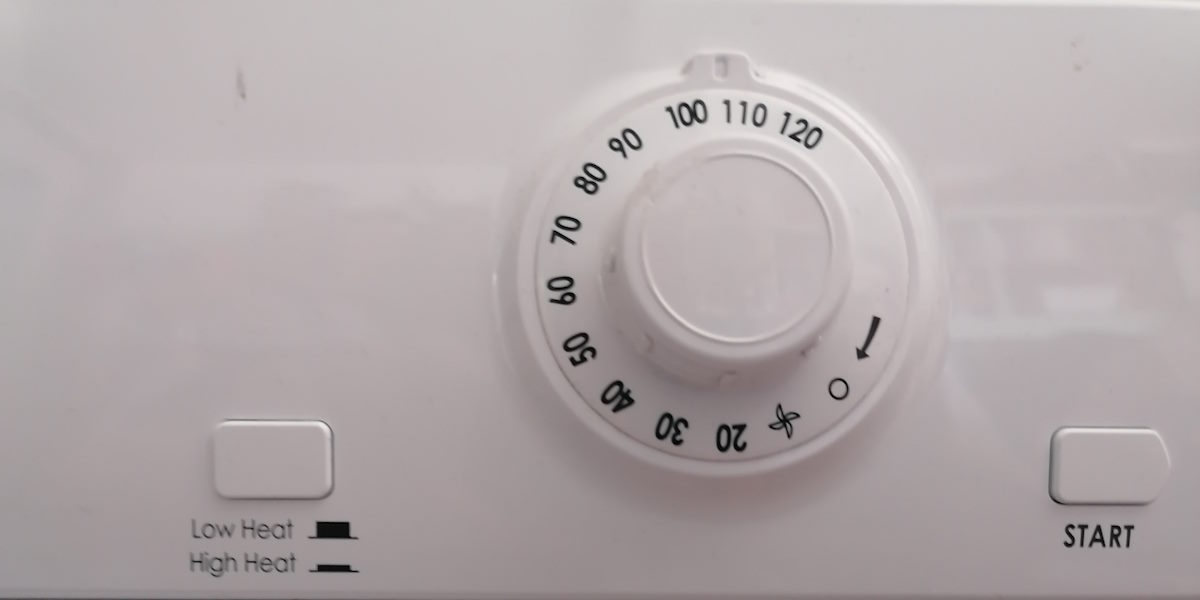
Tumble dryers are one of the most energy and money hungry appliances in the home.
A full load of clothes can take around half an hour, but add in a couple of large bath towels and that could be extended towards an hour costing as much as £1 in electricity.
Beyond using it less, there’s not that much you can do to improve their efficiency. However, one hack I always use where possible is to wash and dry multiple loads one after the other.
That way the second load benefits from the residual heat in the dryer left over from the first one.
I’ve also noticed that once the dryer has been on for around half an hour, the electricity it uses on high heat, is the same as on the low heat setting. Another good reason to dry multiple loads in one go.
More Tumble Drying Tips
- Clean the filter
The filter prevents your dryer getting clogged up with lint and fibres from your washing. But forget to clean it and the dryer has to work harder to push the air out of the vent. Remember to clean it before every load to ensure maximum air flow. - Use dryer balls
Spiky dryer balls work by creating gaps between your clothes so warm air can circulate better, drying them quicker. - Don’t over dry
If your dryer has a timer, it’s easy to get busy and forget to check when your clothes are dry. To prevent wasting heat and money over drying your clothes, get yourself a cheap digital kitchen timer with alarm or use your phone alarm.
Clothes Drying FAQs
How much does it cost to run a tumble dryer for 1 hour?
Costs will vary by type and model, but ours is a typical Hotpoint Aquarius 7kg vented dryer and uses 1.54kWh on low and 2.85kWh on high heat. At our current electricity unit rate of 34p, that equates to 52p an hour on low and 97p an hour on high heat.
However, reality is a bit different from the maths as our dryer automatically reduces the power required on the high setting when a certain temperature is reached. I presume that’s to prevent overheating and typically kicks in after 30 minutes, so the actual cost for an hour on high heat would be more like 73p.
How to Start Saving Today
If nothing else, just pick one of the five tips above and get started today.
If you have a combi boiler, a good place to begin is by checking it’s flow temperature. If it’s currently set to more than 60 degrees, consider turning it down for a week as a test.
While your looking at the settings, also try turning off the pre-heat function if it has one that’s activated.
And remember to come back to this page and leave a comment with your results.