- Solar PV can be used to power every electrical appliance in your home and cut your bills my more than 50%.
- Solar technology still has some major challenges that can affect its potential if your home or lifestyle don’t meet ideal circumstances.
- My own experience shows that its possible to make huge savings and see a 25%+ return in less than two years.
Imagine clicking on the kettle or starting the tumble dryer without worrying about your electricity bill.
That might feel like a pipe dream right now, but it’s a key selling point of the latest home solar energy systems.
Since 2015, I’ve been on a journey to reduce our gas and electricity bills by making our family home more energy efficient. Our biggest investment in that goal was installing a solar panel and battery system in November 2022.
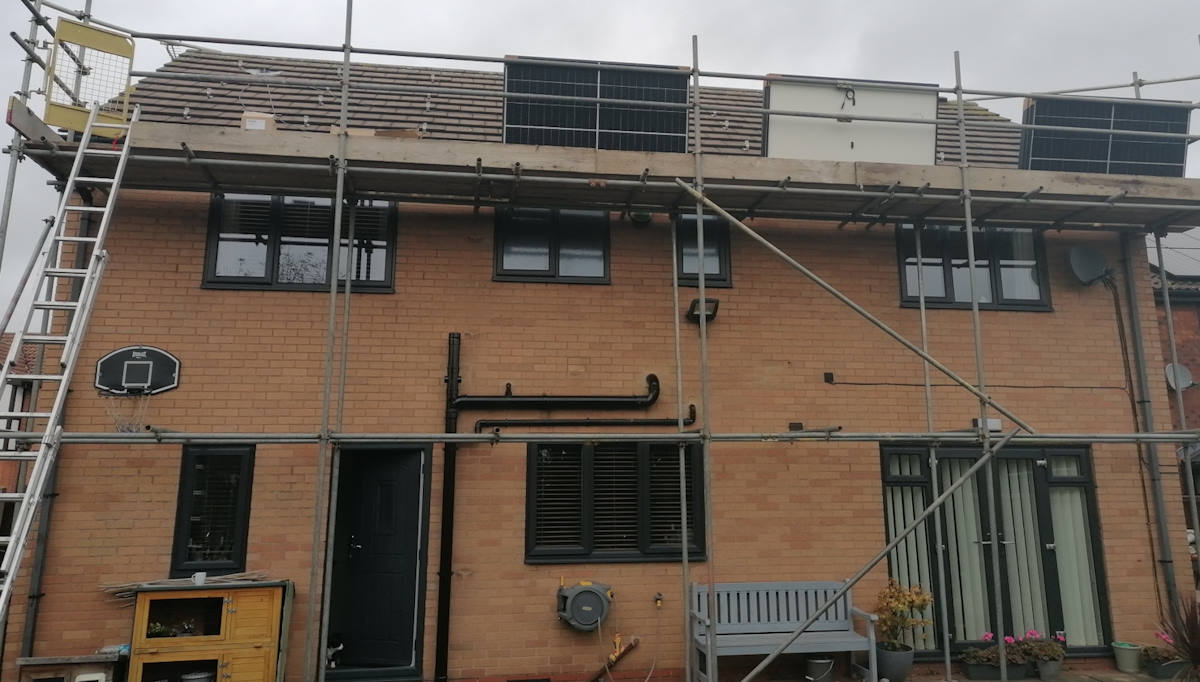
Although sceptical at first, it’s been a game-changer for us!
A combination of reduced energy consumption and selling surplus electricity back to our supplier has seen our bills plummet by 66% with a 26% return on our original investment in just 21 months.
However, as impressive as that sounds, its important to be cautious as solar power isn’t a one size fits all solution for every home.
Its full potential relies on a number of variables working well together, and there are some basic pros and cons you should be aware of first.
Pros and Cons of Using Solar Panels to Power Your Home
There’s no doubt that a well designed solar power system can transform the energy needs of the average UK home in the right circumstances. My own experience has proven that to me and my family.
Having said that, solar technology still has some major challenges that can affect its ability to meet your energy needs if your home or your lifestyle don’t meet those ideal circumstances.
Pros
Long Term Energy Savings
The biggest advantage of connecting your home to a solar energy system is the potential to reduce the amount of electricity you consume from the grid.
Depending on the size of the system, it’s possible to run multiple household appliances and devices on sunny days without having to import electricity from your energy supplier.
Over a year, those daily savings can translate into a substantial reduction in energy bills.
For example, our electricity bill fell by 66% in the first full year following our solar panel and battery installation.
Income from Export Payments
Not only can you save money by reducing your energy consumption from the grid, but you can also get paid for exporting any surplus electricity back to your supplier.
For example, my supplier pays 15 pence for every kilowatt-hour of electric our system exports to them.
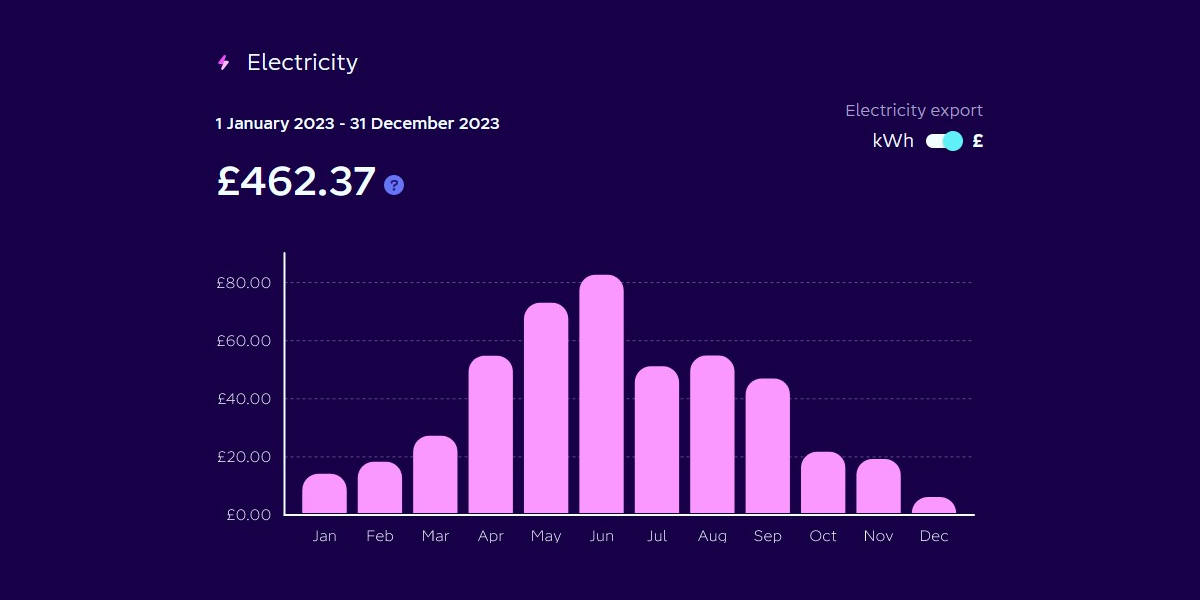
Last year (2023), that amounted to 3152 kWh of electricity worth £472 in credits to our Octopus Energy account, directly reducing the bills we paid.
Energy Independence and Insulation from Market Volatility
By generating your own energy, you can power appliances, central heating and hot water systems, offering peace of mind amidst the volatility of national and international electricity prices.
Potential Increase in Property Value
Although there’s some debate on the amount, research suggests that homes equipped with solar panels may see an increase in property value, as energy efficiency becomes a more sought-after feature among buyers.
Research from the insurer Admiral indicated that solar panels could increase house values by 25% on average compared to similar properties without them. A 2021 report from Solar Energy UK concluded that homes with PV installations could command a price premium of 0.9% – 2%.
Additionally, eligibility for SEG payments can make a property more appealing, presenting an economic advantage to prospective buyers and potentially speeding up the sale process.
Low Maintenance
Solar PV panels have no moving parts, so there’s little need for regular servicing or replacement of components due to wear and tear. The only potential for maintenance is cleaning the panels if they accumulate any dirt or bird droppings.
Environmental Benefits
As a renewable source of energy, solar is great for the environment too.
Cons
High Purchase and Installation Costs
The biggest obstacle or downside of solar panel systems is their initial cost.
With very limited renewable energy grants or cheap financing options, the purchase and installation of a solar power system requires a significant upfront investment.
According to the Energy Saving Trust, that could be around £7,000 for a typical 3.5kWp system.
Solar Output Depends on Location, Roof Orientation and Weather
The efficiency of solar cells is greatly influenced by their location, orientation, and exposure to sunlight.
North facing roofs, for example, may yield less energy compared to those oriented south, affecting the system’s overall productivity.
Weather conditions also play a crucial role, with cloudy or rainy climates potentially reducing the amount of electricity generated.
These factors highlight the importance of a careful assessment of your home’s suitability for solar energy, considering both the geographical location and the specific characteristics of your property.
Despite these challenges, advancements in solar technology continue to improve efficiency, making solar electricity a viable option for an increasing number of homes.
Installation Space Requirements
According to the Energy Saving Trust, the average domestic solar PV system is 3.5kWp requiring around twenty square metres of roof space for panels. You’ll also need at least one square square metre in an accessible area such as a garage, loft or porch for the inverter, meters and switches to be mounted.
How Do Solar Panels Work With Your Home?
The integration of solar panels with your home involves a direct connection to your electrical system, allowing the energy produced to be used immediately to power appliances and lighting or stored in batteries for later use.
Understanding how these systems work with your home is crucial for maximizing their benefits.
How Solar Power is Generated and Delivered to Your Home?
Solar power generation and its delivery to homes involve a series of steps and technologies to convert sunlight into electricity, then distribute this clean energy for use around your house.
Here’s an overview of how this process works:
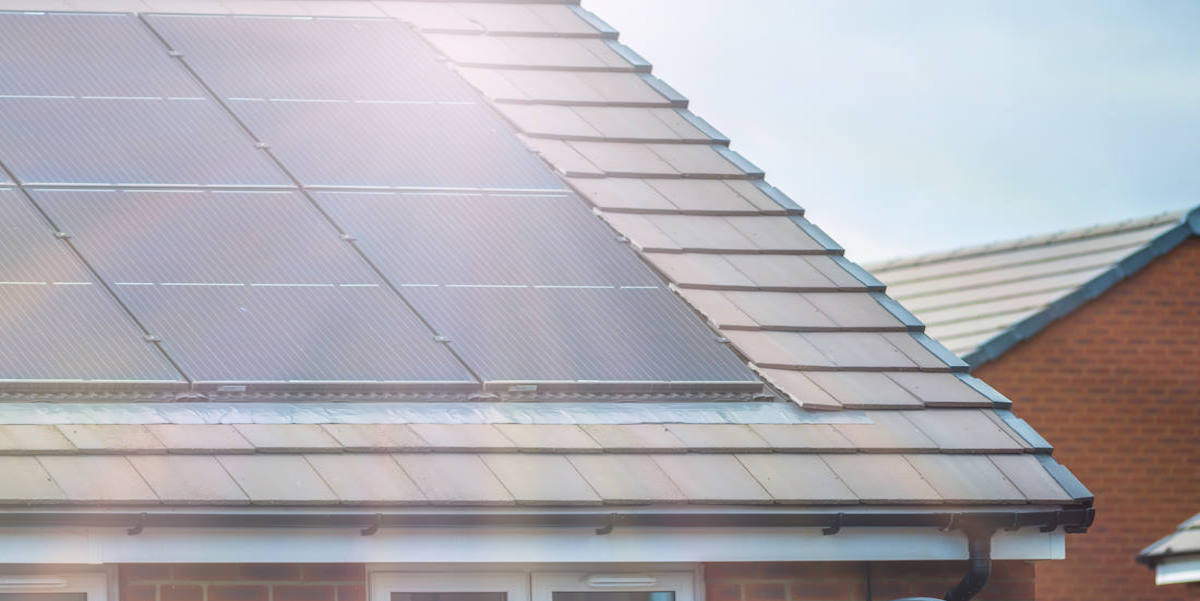
When sunlight hits PV panels, the solar cells within the panels absorb photons (particles of light), generating a direct current (DC) of electricity. The intensity of the sunlight, the angle of the panels, and the efficiency of the cells all contribute to the amount of electricity produced.
Ways to Use Solar Power Around Your Home to Save Energy and Money
Run Appliances
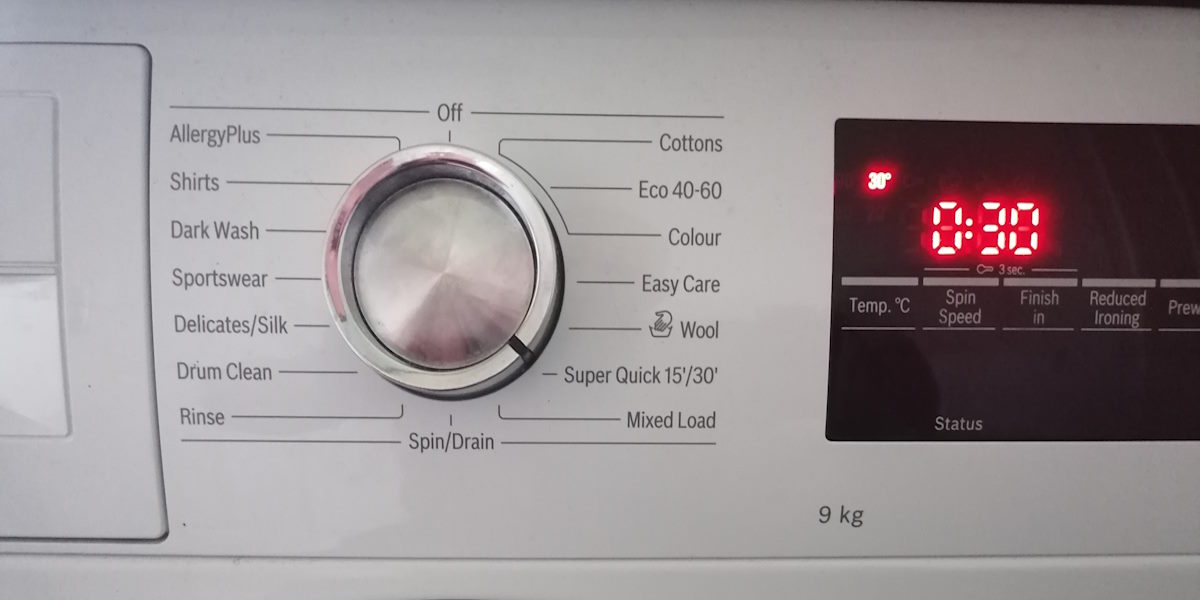
Once energy supplied by solar panels is converted into usable electricity by an inverter, it’s available to use through any wall socket in your home to power large and small appliances.
The only issue to be aware of is running too many appliances at once, as the power they need could add up to more than what your panels and/or battery could provide.
If that happens, you’ll draw the extra electricity needed from the grid at your normal unit rate. To prevent that, use delay timers to stagger appliance cycles or in conjunction with a battery to fill in gaps with stored energy between sunny periods.
Power Lighting
Not only can solar energy be used from plug sockets, it’s also available to your normal lighting circuit.
So every light connected to it can run off clean electricity generated by your panels.
Now, because you’re most likely to use lighting at night, you’ll need battery storage to power them with electricity saved from your panels during the day.
Heat Water
Hot water can be generated with solar power in two ways, depending on what type of solar panels and heating system you have.
If you have a system boiler with an immersion heater, it can be powered by electricity generated from standard solar PV panels.
All that’s required is a solar diverter device, costing £300-£500, which monitors when your panels are providing more energy than your home can use. Once that happens, it’s able to divert any surplus electricity to the immersion heater to provide hot water to your taps or showers.
The second way is by installing thermal solar panels or collectors.
Rather than generating electricity, thermal solar systems absorb the sun’s heat using a fluid which passes through the panels or tubes. This heated fluid is then circulated through a hot water cylinder which heats up cold water supplied from the mains.
Deciding which solar hot water option is right for you depends on your current heating system, energy usage habits and budget.
Central Heating
Currently, the only way to run your central heating with solar energy, is to convert it to an electrical based system powered by a heat pump, electric boiler or electric radiators.
Any of these alternative heating systems can then receive power directly from a solar array in good weather or a battery charged with cheaper off-peak electricity during winter months.
Again, which option might be best for you and your home, depends on your property configuration, lifestyle and budget.
Charge Electric Vehicles
Whether you already run an electric vehicle or plan to in the near future, having access to solar power at home can significantly reduce your motoring costs.
Given that most electric-car charging at home occurs overnight, the installation of a home battery system is crucial.
It stores the solar energy collected from the panels during the day, making it available to charge an EV overnight, reducing dependency on the grid and electricity costs significantly.
Charge Solar Batteries
I would always recommend including a battery with solar panels if it’s within your budget.
Even a small solar battery system (3-5 kWh) can help you access the maximum money saving potential of solar panels for your home and shorten the payback period.
A battery can also help pay for itself without being charged from PV panels.
When paired with a dual rate or smart energy tariff, you can automatically charge a battery with mains power during off-peak hours and use that cheaper electricity during peak hours to reduce your overall energy costs.
Types of Solar Energy Systems
There are two main types of solar energy technology you can install at home: Solar Photovoltaic (PV) Panels and Solar Thermal collectors.
Understanding the difference between these systems is essential for making an informed decision that supports your household’s energy consumption patterns and goals.
Solar Photovoltaic (PV) Panels
Solar PV panels are the most popular choice for homeowners looking to reduce their bills and dependence on the national grid. These panels convert sunlight directly into renewable electricity using semiconductor materials.
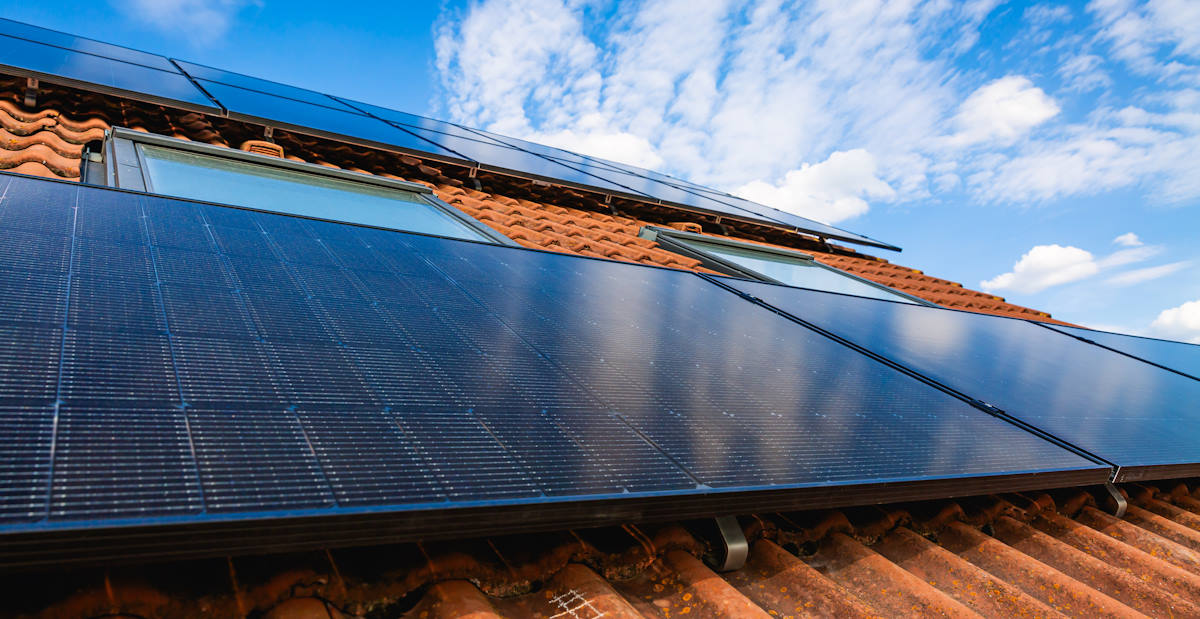
The efficiency of solar PV panels has dramatically improved, and the cost of installation has decreased over the years. This makes them an attractive option for homeowners seeking long-term savings on electricity bills and shorter payback periods.
With the potential for generating excess electricity, you can also benefit from export payments from your energy supplier through schemes like the Smart Export Guarantee (SEG), adding another financial incentive to invest in solar power.
Solar Thermal Systems
Solar thermal systems, offer a different approach to harnessing the sun’s energy by generating heat rather than electricity.
Solar thermal collectors or panels absorb sunlight, transforming it into heat, which is then transferred to mains water held in dedicated tank or cylinder.
Once heated, the hot water can be used throughout your home from taps and showers.
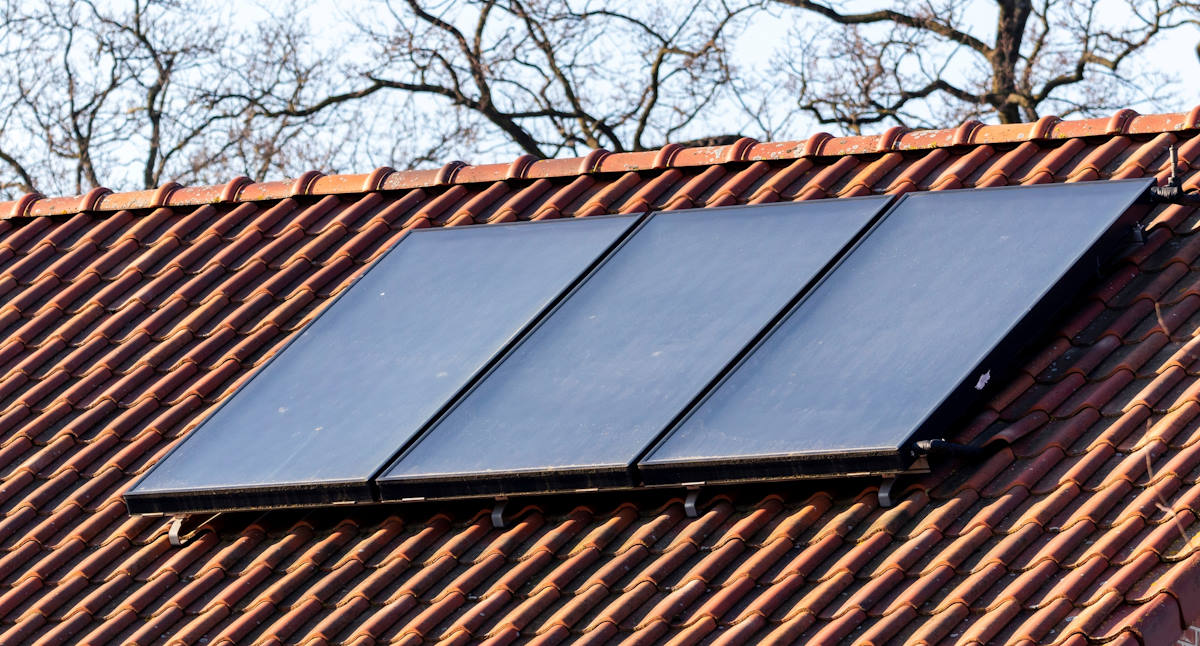
When selecting solar thermal panels, the choice often comes down to flat plate panels (above) or evacuated tube collectors.
Flat plate panels are thinner, known for their durability and cost-effectiveness, making them a popular choice for residential use.
Evacuated tube collectors, on the other hand, offer higher efficiency, especially in colder climates, but come at a higher initial cost.
Understanding Solar Batteries and Their Benefits
One of the traditional weaknesses of solar power is that the electricity generated has to be used as soon as it’s produced to maximise it’s money saving potential, rather than being lost or exported for pennies.
Even if you’re at home during a sunny day and run appliances to save money, there’s the problem of unpredictable British weather. A brief spell of cloud can more than halve the energy produced by solar panels, requiring electricity to be imported from the National Grid to finish an appliance cycle.
Rather than filling in gaps in solar generation with expensive electricity from your supplier, a battery can do the same but supplied with free energy stored from your own panels.
There’s also a second benefit that home energy storage can provide.
During winter months when there might not be enough sun to fill a battery, you can top it up with cheaper off-peak electricity provided with a dual-rate or smart tariff.
For example, off-peak is typically during night time hours when you can program a battery to import and store electric from the grid at the reduced rate. This cheaper electricity can then be used during normal or high-peak times, effectively discounting your energy costs.
Deciding If Solar Is Right for You and Your Home
Not every house is able to take full advantage of the benefits that solar power can provide.
The key question is, can your roof produce enough power to meet your expectations and make the initial cost worth it?
That can be answered by understanding these factors:
- How much energy you consume annually?
- How much electricity could your roof could generate annually with the latest solar panels considering it’s size, direction and pitch angle?
- How much of that energy could you actually use to reduce the amount you need to import from the grid?
- How much can you afford to pay for the initial installation?
- How long you are prepared to wait to get your money back through reduced energy bills and export payments?
How to Check Your Home’s Suitability for Solar Panels
You can complete many of these checks yourself but others might need the expertise of a qualified installer.
Is Your Roof Suitable?
Orientation
Solar PV panel systems convert sunlight into electricity, so a roof that faces the sun for as much of the day as possible will generate the most power for your home.
South-facing roofs capture the most sunlight in the UK, but alternative orientations can still be viable.
According to the Energy Saving Trust, east or west facing roofs generate up to 20% less electricity than south facing ones.
Your roof doesn’t have to be directly facing south for maximum output, my own faces south-east and generates higher than average kWh.
Angle or Pitch
The ideal roof pitch is between 35-40 degrees as it provides the optimal balance between light absorption and self-cleaning with the help of rainwater.
Having said that, anywhere from 10-60 degrees can be suitable and even flat roofs can work with angled mounts.
Size
The size of your roof dictates how many panels you can install, and therefore how much electricity the whole system can generate for your needs.
According to the Energy Saving Trust, the average solar PV system of 3.5 kWp requires 10-20 square meters of roof space.
Condition
Your roof should be in good condition and able to support the weight of solar panels for the 25+ year expected lifespan of the system.
Shading
Another important factor to consider is if your roof is shaded by chimneys, other buildings or trees which could reduce the sunlight that reaches the panels.
If just one panel is shaded, it can affect the overall output of the rest.
Do You Have Enough Space for System Components?
A solar PV system is more than just panels.
Depending on the specification you choose, it could also include the following components:
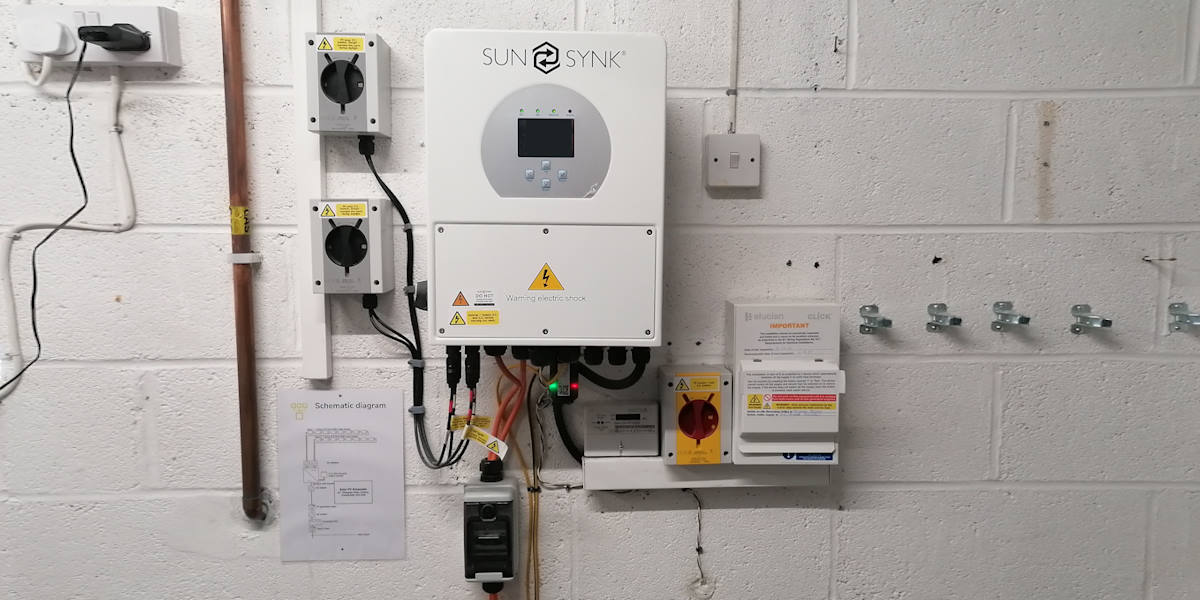
- Inverter (converts the DC electricity generated by the panels into usable AC power).
- Isolator Switches (allow different parts of the system to be turned on and off for maintenance).
- Fuse box (dedicated safety device that is separate from your main electricity board).
- Import/Export meter (record how much energy is imported and exported to the grid).
- Battery (store electricity from the panels or imported from the grid).
All these components are typically installed together in an easy to access location like a garage, loft or porch and will need at least one square metre of space with adequate ventilation.
Additional Questions to Consider
Do You Plan to Move House in the Next 5-10 Years?
With an optimal payback period being around 12 years for non-battery systems according to the Energy Saving Trust, moving house before then could leave you out of pocket.
While I believe some of the official payback periods are based on older technology and tariffs, any uncertainty about moving home in the medium term, should be a major factor in your decision making.
Will You Need Planning Permission to Install Solar Panels?
Most solar installations, like mine too, will be classed under the permitted development status and not need planning permission unless you live in a listed property or conservation area.
However, it’s always worth contacting your local authority planning department to make sure before ordering an install.
I simply filled out an online form on my local authority’s website and got the following response a few days later:
“Based on the information you have provided, it is my opinion that planning permission would not be required for the proposed solar panels, as this is considered to be within the limitations of the permitted development regulations.”
Will You Need Permission from a Landlord?
If you rent or don’t own your home outright, you will need permission from the owner or part-owner of the property.
Even if that is a possibility, you need to be confident that you’ll be able to stay in the property at least long enough to get your money back through bill savings and export payments.
Remember, a full solar PV installation isn’t portable, so you can’t take it with you to another home.
Are You Able to Use Solar Energy as it’s Generated?
The more electricity you can consume directly from a solar PV system as it’s generated during daytime hours, the greater the savings will be and the shorter the payback period.
This is because the cost of importing electricity from the grid is typically much higher than the payments received for exporting unused or excess energy under schemes like the Smart Export Guarantee (SEG).
So, if you can use your highest consuming appliances and devices during the day, the lower your bills will be.
If you’re not home during the day or not able to shift your consumption to peak solar hours with delay timers, you’ll need a battery to store the energy generated for later use.
Useful Solar Suitability Calculation Tools
Accurate data is essential to making an informed decision about solar panel installation.
Ultimately, a good MCS and EPVS accredited installer is best placed to provide that. But, if you’re not at that stage yet, the following calculators can give you an indication or estimate of your property’s suitability.
Energy Saving Trust Solar Panel Calculator
The EST Solar Calculator provides estimates on installation costs, potential savings on electricity bills, and earnings from selling electricity back to the grid. It requires basic information about your house and electricity usage, making it user-friendly and easy to complete in a few minutes.
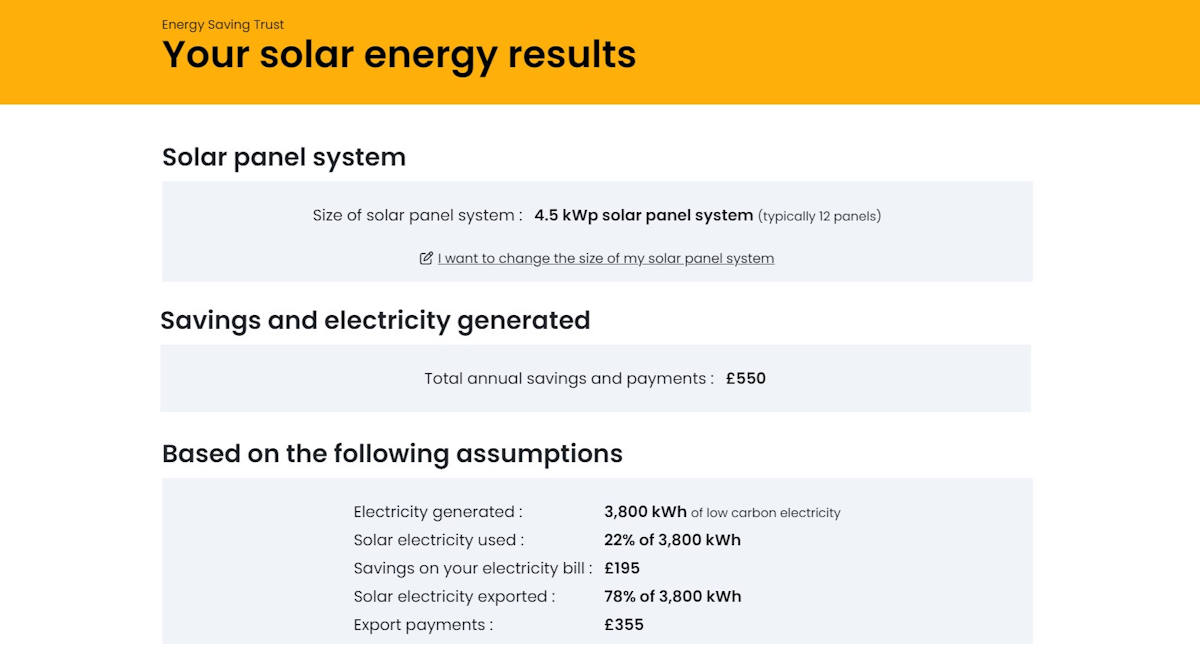
Results Generated
- Roof orientation
- Estimated solar output with an average system size
- Estimated energy bill savings and payback period
- Estimated annual export payments
Meyer Burger Solar Calculator
The Solar Calculator provides detailed estimates on solar yield, self-sufficiency, and CO2 savings. The tool uses satellite views to help you identify your available roof area and input specific details like roof type and angle.
The main restriction I found was not being able to see the impact of different PV system sizes on the results.
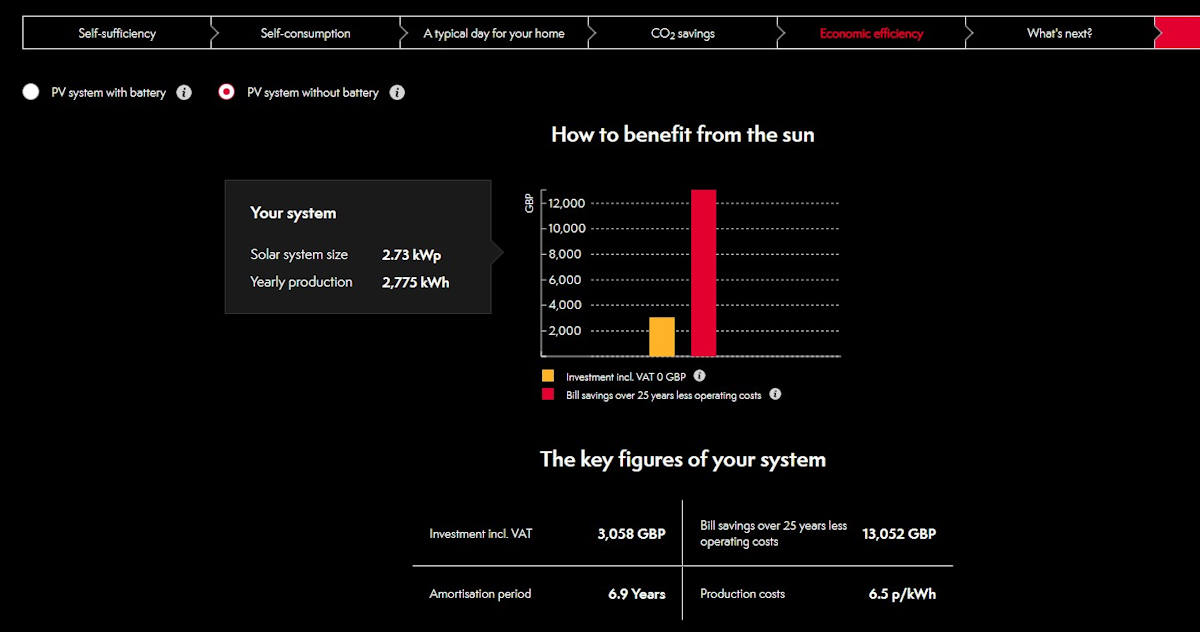
Results Generated
- Roof size
- Roof orientation
- Estimated solar output with an average system size
- Estimated energy bill savings and payback period
- Self sufficiency levels throughout the year
- Impact of installing a battery on the above figures
Solar Wizard
Solar Wizard takes your address and estimates how much solar energy would reach each part of your roof throughout the year. From that data it estimates the costs and savings using real-world installation stats and benchmark figures.
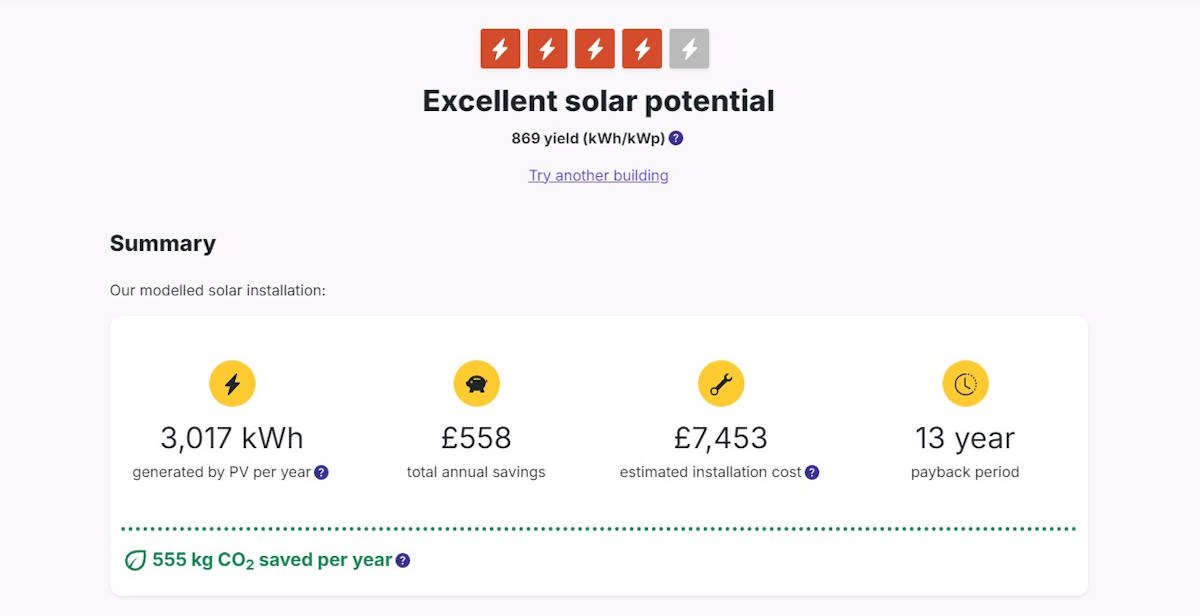
Results Generated
- Roof size
- Roof orientation
- Roof slope angle
- Annual kWh generated
- Total annual saving
- Estimated installation cost
- Payback period
The Financials: Costs, Savings and Grants
One of the biggest barriers to installing solar power for many UK homes, is the often sizeable upfront cost required to buy a system large enough to see a real reduction in energy bills.
The good news is that prices have fallen slightly since the highs of the energy crisis and Government incentives like 0% VAT have also helped.
So what does that mean for the cost of solar panels for homes in 2025?
Typical Costs of Solar PV Systems
The cost of solar PV installation is influenced by multiple factors relating to your own property, technology developments and market conditions.
That basically means that there isn’t a one size fits all cost, which is why it’s essential to get at least three quotes from reputable installers based on your specific situation.
The best indicator of an average price comes from actual MCS (Microgeneration Certification Scheme) data.
As you can see from the table below, the average cost for Solar PV across all domestic installations was £10,401 in 2023 and £9,277 in 2024.
According to the Energy Saving Trust, the average domestic solar panel system is 3.5kWp and costs around £7,000.
The tables below provide a general overview of typical installation costs for different size systems and properties with and without a battery based on 2024 MCS data.
Estimated Installation Costs Without a Battery
| wdt_ID | Property Size | System Size | Panels* | Installation Cost** |
|---|---|---|---|---|
| 1 | 1-2 bed | 2kW | 5-6 | 3,800 |
| 2 | 3 bed | 3kW | 8 | 5,700 |
| 3 | 4 bed | 4kW | 10 | 7,600 |
| 4 | 5+ bed | 5kW | 13-14 | 9,500 |
Estimated Installation Costs With a 5kWh Battery
| wdt_ID | Property Size | System Size | Panels* | Installation Cost** |
|---|---|---|---|---|
| 1 | 1-2 bed | 2kW | 5-6 | 5,800 |
| 2 | 3 bed | 3kW | 8 | 7,700 |
| 3 | 4 bed | 4kW | 10 | 9,600 |
| 4 | 5+ bed | 5kW | 13-14 | 11,500 |
*Figures assume 400W solar panels are installed and rounded to the nearest whole number, as you can’t install a fraction of a panel. The actual number of panels required to achieve the desired system size may vary depending on the specific wattage of the model chosen for installation.
**Source: MCS (Microgeneration Certification Scheme) average of £1907 per kWp rounded to nearest £100.
Calculating the Right System Size
There’s no substitute for a survey of your specific property by a professional installer.
However, to give you an idea of the system size you’ll need and what that could cost, you can do some simple calculations based on average figures.
Know Your Energy Needs
Other than your budget, the main factor to consider is your electricity usage. Look at your most recent bills to find your annual consumption in kWh.
In the UK, you can expect to generate between 700-900 kWh annually per kWp of installed capacity according to the Centre for Sustainable Energy.
Once you know your annual usage, simply divide that by the above 700-900 figure. If your roof faces south and you live in the southern regions of the UK, consider using the higher number. If your roof faces east/west or you live in the north, consider the lower range.
Example: The average UK household uses around 3,000 kWh a year. So for a south facing property in the midlands, simply divide 3000 / 800 = 3.75 kWp.
If you can afford to, round up the system size to account for weather fluctuations, future proofing and to provide more usable generation on cloudy days.
For example, our annual usage is 4,400 kWh, which using the above calculations gives a system size of 5.6 kWp. But we decided to oversize our installation to 6.48 kWp (16 panels) in case we get an electric car and to generate enough energy to cover our homes base demand on cloudy days.
Check Your Roof Space
Once you have an idea of the system size needed, confirm if your roof is big enough to fit all the panels.
Tip: You can get an estimate of your roof’s size using the recommended calculators above.
The power output of today’s solar panels typically range from 350-450 watts each. Again, lets take an average figure of 400 watts which is about the same as my system panels.
Simply divide your system size in watts by 400 to work out how many panels you’ll need.
Example: Solar panels are rated in watts and systems in kilowatts, so the system size has to be converted into watts first by multiplying it by 1000.
3.75 kWp x 1000 / 400 w = 9.375 panels
As you can only buy full panels, round partial figures up or down to the next whole number depending on your budget or energy needs.
So how much roof space will you need?
Multiply the number of panels by the space each panel requires (about 2 square meters) to ensure your roof has enough space.
10 panels x 2 sq/m = 20 square metres.
If your roof isn’t big enough, simply divide it’s size in square meters by 2 to work out how many panels could fit.
For example: 16 square meters / 2 = 8 panels
Then work out the total system size: 8 panels x 400 watts each = 3200 (3.2 kWp). If you need a bigger system, you can always pay extra for more efficient 450w or even 500w panels.
Grants and Incentives for Installing Solar Panels in the UK
Grants and incentives can significantly reduce the upfront costs of solar installation and make the payback period much shorter.
There are several schemes available to homeowners, some of which have specific eligibility requirements.
Understanding the range of current funding options can make going solar more affordable and financial rewarding.
Savings on Energy Bills and Earnings from the Smart Export Guarantee
The data below is sourced from the Energy Saving Trust, which given my own experience, provides quite conservative estimates.
Table 1: Estimated Return from Solar PV Systems without a Battery
| wdt_ID | wdt_created_by | wdt_created_at | wdt_last_edited_by | wdt_last_edited_at | System Size | Annual Generation* | Annual Savings** | Annual SEG Earnings*** | Initial Cost | Payback Period |
|---|---|---|---|---|---|---|---|---|---|---|
| 1 | 2 | 1,600 | 147 | 96 | 3,800 | 15 | ||||
| 2 | 3 | 2,400 | 221 | 144 | 5,700 | 15 | ||||
| 3 | 4 | 3,200 | 294 | 192 | 7,600 | 15 | ||||
| 4 | 5 | 4,000 | 368 | 240 | 9,500 | 15 | ||||
| 5 | 6 | 4,800 | 442 | 288 | 11,400 | 15 |
*Average annual generation of 800 kWh per 1 kWp of panels according to CSE.
**Assumes a 40% consumption rate saving electricity at £0.23 p/kWh.
***Average SEG export payment unit rate of £0.10 p/kWh and 60% export rate.
Table 2: Estimated Return from Solar PV Systems with 5kWh Battery
The cost of solar batteries can very enormously depending on their size, capabilities and brand.
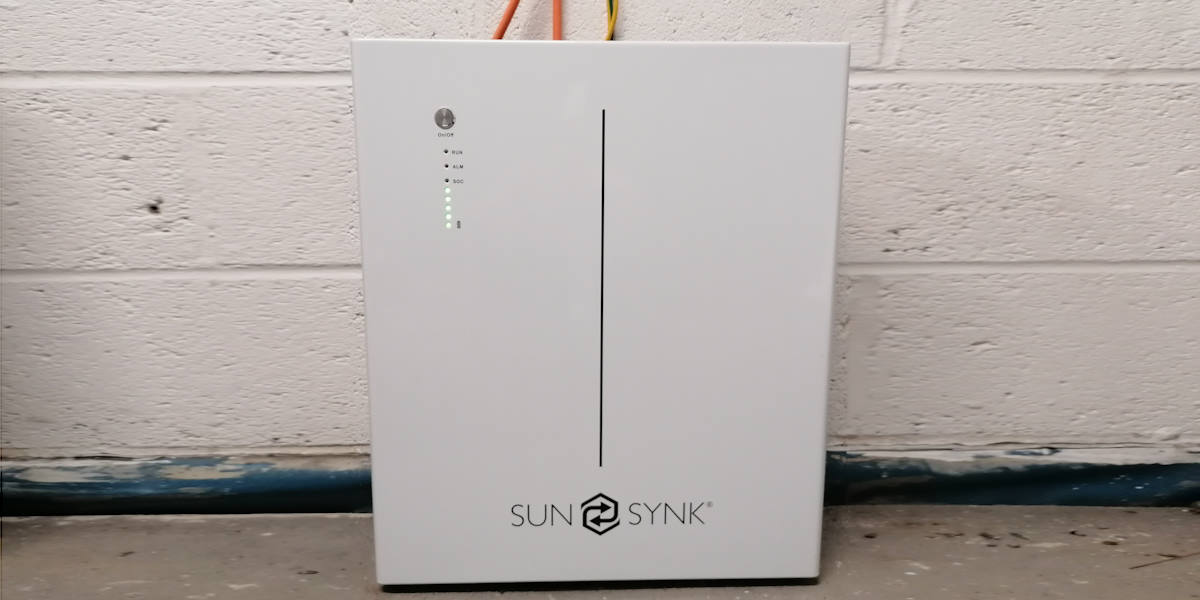
I have used a recent quote of £2000 for a Sunsynk 5.12 kWh battery in the calculations below.
| wdt_ID | wdt_created_by | wdt_created_at | wdt_last_edited_by | wdt_last_edited_at | System Size | Annual Generation* | Annual Savings** | Annual SEG Earnings*** | Initial Cost | Payback Period |
|---|---|---|---|---|---|---|---|---|---|---|
| 1 | 2 | 1,600 | 221 | 96 | 5,800 | 18 | ||||
| 2 | 3 | 2,400 | 331 | 144 | 7,700 | 16 | ||||
| 3 | 4 | 3,200 | 442 | 192 | 9,600 | 15 | ||||
| 4 | 5 | 4,000 | 552 | 240 | 11,500 | 14 | ||||
| 5 | 6 | 4,800 | 662 | 288 | 13,400 | 14 |
*Average annual generation of 800 kWh per 1 kWp of panels according to CSE.
**Assumes a 60% consumption rate, saving electricity at £0.23 p/kWh.
***Average SEG export payment unit rate of £0.10 p/kWh and 40% export rate.
How Much Could You Really Save on Energy Bills?
Whilst the above figures are a helpful guide, they’re only estimates based on averages, which I’ve found to be quite conservative.
However, I can share real figures from my installation.
Again, the caveat is that no two properties or installations are the same and even an on-site survey of your home will only produce a forecast because no one can predict the weather.
The table shows what my own 6.48 kWp south-facing system, located in the Midlands, actually generated in energy savings throughout 2023.
Bear in mind that these savings are based on my own tariff rates and consumption habits so will differ from what you might experience.
| wdt_ID | wdt_created_by | wdt_created_at | wdt_last_edited_by | wdt_last_edited_at | Month of 2023 | Solar Generation (kWh) | Solar Consumption (kWh) | Electricity Cost (p/kWh) | Monthly Savings | Total Savings |
|---|---|---|---|---|---|---|---|---|---|---|
| 1 | January | 324 | 233 | £0.42 | £97.86 | £97.86 | ||||
| 2 | February | 380 | 261 | £0.42 | £109.62 | £207.48 | ||||
| 3 | March | 500 | 320 | £0.42 | £134.40 | £341.88 | ||||
| 4 | April | 726 | 357 | £0.40 | £142.80 | £484.68 | ||||
| 5 | May | 932 | 438 | £0.40 | £175.20 | £659.88 | ||||
| 6 | June | 973 | 413 | £0.40 | £165.20 | £825.08 | ||||
| 7 | July | 740 | 396 | £0.35 | £138.60 | £963.68 | ||||
| 8 | August | 774 | 403 | £0.35 | £141.05 | £1,104.73 | ||||
| 9 | September | 646 | 329 | £0.35 | £115.15 | £1,219.88 | ||||
| 10 | October | 399 | 255 | £0.32 | £81.60 | £1,301.48 | ||||
| 11 | November | 332 | 205 | £0.32 | £65.60 | £1,367.08 | ||||
| 12 | simonm | 23/09/2024 01:24 PM | simonm | 23/09/2024 01:24 PM | December | 152 | 115 | £0.32 | £36.80 | £1,403.88 |
How Much Could You Earn from Exporting Surplus Solar Energy?
How much you can earn from exporting surplus electricity depends on three factors:
- How much electricity your system produces (system size, roof angle/orientation, weather)
- How much of that is exported (usage patterns, battery)
- How much you earn per kWh (export tariff rate)
Again, here’s what my own system actually generated in SEG revenue throughout 2023.
| wdt_ID | wdt_created_by | wdt_created_at | wdt_last_edited_by | wdt_last_edited_at | Month of 2023 | Solar Generation (kWh) | Exported (kWh) | Octopus SEG Rate (p/kWh) | Export Revenue | Total Revenue |
|---|---|---|---|---|---|---|---|---|---|---|
| 1 | January | 324 | 89 | £0.15 | £13.35 | £13.35 | ||||
| 2 | February | 380 | 118 | £0.15 | £17.70 | £31.05 | ||||
| 3 | March | 500 | 180 | £0.15 | £27.00 | £58.05 | ||||
| 4 | April | 726 | 365 | £0.15 | £54.75 | £112.80 | ||||
| 5 | May | 932 | 480 | £0.15 | £72.00 | £184.80 | ||||
| 6 | June | 973 | 550 | £0.15 | £82.50 | £267.30 | ||||
| 7 | July | 740 | 334 | £0.15 | £50.01 | £317.31 | ||||
| 8 | August | 774 | 360 | £0.15 | £54.00 | £371.31 | ||||
| 9 | September | 646 | 301 | £0.15 | £45.15 | £416.46 | ||||
| 10 | simonm | 23/09/2024 01:37 PM | simonm | 23/09/2024 01:39 PM | October | 399 | 144 | £0.15 | £21.60 | £438.06 |
| 11 | November | 332 | 125 | £0.15 | £18.75 | £456.81 | ||||
| 12 | simonm | 23/09/2024 01:39 PM | simonm | 23/09/2024 01:39 PM | December | 152 | 37 | £0.15 | £5.55 | £462.36 |
The Solar Panel Installation Process
Check if You’ll Need Planning Permission
As already mentioned, unless you live in a conservation area or listed building, most solar installations will fall under permitted development and not require a planning application.
Despite that, I would still recommend contacting your local planning department and checking anyway.
Get a Smart Meter
If you plan to take advantage of export payments and the latest smart tariffs, you’ll need a smart meter installed.
If you don’t already have one, simply contact your energy supplier to request an installation.
Choose an Installer
Get quotes from three different MCS registered installers who have good online reviews.
Each should complete a survey of your home followed by a proposal that includes a full costing and forecast of their systems annual generation.
Apply for DNO Approval (distribution network operator)
For systems larger than 3.68kWp, a G99 application must be submitted to your local Distribution Network Operator (DNO) and approved before installation can go ahead.
Systems smaller than 3.68 kWp, only require a G98 application which can be submitted after installation.
Your chosen installer can submit and manage the application for you.
Book an Installation Date
Depending on the size and complexity of your system, the installation could take 2-3 days to complete.
The first step is for scaffolding to be erected around your roof which your installer should arrange.
Once that’s in place, the fitting of panels to your roof can begin. These are then wired into the inverter via isolater switches. Additional components such as export meters, fuse boxes and any batteries are also connected.
A Wifi connector will also be installed to ensure the system can communicate with an online monitoring app which you can use from a smart phone or computer. The installer should show you how to use the app to monitor performance and change settings.
Register Your Install with MCS
Once complete, your installer will register your system and give you an MCS certificate which is required by your chosen energy supplier to apply for an export tariff.
Sign Up for an Export Tariff
You can apply for an SEG export tariff with any supplier as long as you have the following:
- Compatible smart meter
- MCS certificate
- DNO approval letter
Once complete, you’ll start receiving credit to your account for the electricity you export.
Lessons from My Solar Panel Experience
Our solar PV system was installed in October 2022 and was our first experience of solar power. We didn’t know anyone with solar panels either, so had to base our final decision on lots of research.
I’ll admit that I was skeptical of the potential given British weather and the cost.
After almost two years of living with home solar technology, here’s what I would recommend.
Understand the Basics
Although solar technology is quite simple, understanding how all the components work together and which could produce the best outcome for you, can be more complicated.
But there are some basics you should understand to ensure you make the right choice of system and installer.
Terminology
Understanding an installers proposal document will be a lot easier if you know what common terms like kWp (kilowatt peak) and kWh (kilowatt hour) mean.
System Components
Having a basic understanding of solar PV components helps you to ask informed questions, identify potential overselling or under-specification, and ensure you pay a fair price for a system that meets your daily energy needs.
Get Multiple Quotes from Accredited Installers
There’s no shortage of companies and trades offering solar panel installation.
Prices and specification can vary significantly between different suppliers, which is why it’s vital to get at least three quotes from qualified, certified and reputable installers.
For example, one of the installers I received a quote from wanted to charge £1,900 more for a smaller system using components which were of a lower quality and specification.
What Makes a Good Installer?
- MCS certified
- Members of energy industry consumer protection schemes like HEISS, RECC and EPVS.
- Good reviews on third party websites such as Facebook, Google and Trustpilot.
- Offer a choice of solar technology brands with comprehensive warranties.
Why Certified Installers Matter
Installers certified by the industry bodies above agree to adhere to recognised industry standards and can be subject to random inspections.
Certification can also ensure a level of financial protection with some schemes offering deposit protection, insurance backed guarantees and dispute resolution.
It’s particularly important to choose an MCS accredited installer as you’ll need an MCS certificate to apply for an SEG tariff and get paid for the surplus energy you export.
Get the Biggest System You Can Afford
Installing the biggest PV system you can afford, sometimes known as oversizing, ensures it can generate more usable levels of energy during cloudy days and winter months.
It also provides a level of future-proofing and the potential for a shorter payback period should your electricity consumption increase due to EV charging for example.
Get a Battery
Not only does a home solar battery help you to use more of the energy generated by your panels, it can also save you money when the sun isn’t shining.
Solar batteries don’t just charge from solar panels, they can be charged with electricity from the grid too.
The advantage of that is they can store energy imported at cheaper off-peak unit rates if you have a multi-rate tariff such as economy 7 or one of the latest smart tariffs.
This cheaper electricity can then be used during peak times to reduce your overall energy bills.
During winter months, I regularly charge our battery to 90% overnight to take advantage of cheaper energy, which we then use to run everyday appliances.
Think Carefully About Inverter Location
An inverter is the brain of a solar installation and most come with a detailed information display which shows live system data.
That real-time data can be very useful when you have multiple appliances to run and need to know if there’s enough energy being generated or battery charge left to cover their power demand.
Although most systems now include phone apps that will show the same information, there’s often a delay which can be a problem for short cycle appliances like kettles, toasters and microwaves during changeable weather.
If your inverter is just a few meters away in a utility room or garage, it’s easy to check the actual numbers when you need them.
Choose the loft as your inverter location and that ability becomes a lot harder.
We chose the garage for our inverter which is within a few meters of the kitchen and major appliances.
How Much Have We Saved?
After 21 months of use, our system has generated a return of £3,020.
That comes from a combination of £2,184 in saved energy and £836 from exporting surplus electricity back to the grid via our supplier.
Has it Been Worth it?
For us, with a south facing, unshaded, 35 degree roof and 6.48 kWp system, the 26% ROI after less than two years has definitely been worth it.
Not only financially, but also day to day, not having to worry about volatile energy markets, using certain appliances or racking up huge electric bills.
Our Octopus Energy account is currently £700 in credit and we’re able to reduce our monthly direct debit to less than £50 in summer months.
To find out if solar power could do the same for you, try the solar suitability checker or follow my checklist below.
Get Started with My Home Solar Energy Checklist
If you’re new to home solar power or even if you’re reconsidering it, everything I’ve discussed can be a lot to absorb.
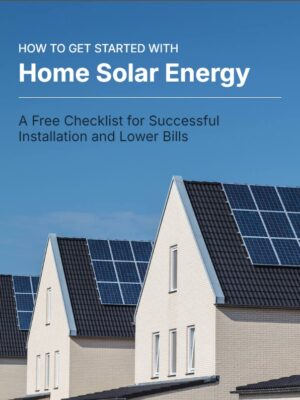
To help with that and provide a quick reference, I’ve created a simple checklist that you can keep and follow.
It covers the main steps to consider before, during and after solar installation to help you find the best system and installer for your needs.
It’s completely free and based on my own experience as a first time solar PV customer.
If you’re not quite ready for a checklist, but still have questions, leave a comment below and I’ll respond as soon as possible.